Flats without lifts: practical Primrose Hill moving hacks
Posted on 18/06/2026
If you are moving in Primrose Hill and the building has no lift, you already know the mood: narrow stairwells, awkward corners, a sofa that suddenly seems to have grown overnight, and a clock that keeps ticking. Flats without lifts are common across this part of London, and they demand a different kind of planning. The good news? With the right approach, a no-lift move can be calm, efficient, and far less bruising than people expect. In this guide, we'll walk through practical Primrose Hill moving hacks that actually help - from packing and stair strategy to parking, safety, and the little decisions that save a lot of grief later.
One thing worth saying upfront: this is not about brute force. It is about order, preparation, and sensible use of help. If you get those right, you can make a top-floor move feel manageable. Messy? Sometimes. Doable? Absolutely.
Why flats without lifts: practical Primrose Hill moving hacks Matters
A no-lift move changes everything. In a building with a lift, your biggest problem is usually timing. In a building without one, the staircase becomes the bottleneck. That affects how you pack, what furniture you can move safely, how many people you need, and whether you can keep the day moving at all.
Primrose Hill adds its own flavour to the challenge. You see elegant older conversions, Victorian terraces, compact flats, and staircases that seem to turn just when you think you've got a straight run. Some landings are tight enough that a mattress needs a proper pivot, not just a push. And if parking is awkward on the street outside, you may end up carrying items further than you expected. That combination is why planning matters so much here.
There is also the human side. Moving day in a no-lift property can become tense quickly. People get tired. Fingers slip. Tensions rise over who is carrying what. A small delay can snowball. That is why a practical system is better than trying to "just get it done" with enthusiasm and a few friends in trainers.
Key takeaway: the more stairs you have, the more your move depends on preparation, sequencing, and reducing load size before anyone touches the first box.
If you want to get the packing side right before the stair work begins, it helps to read the guide to efficient moving packing and the advice on decluttering before relocation. Those two steps alone can cut a surprising amount of pressure from a no-lift move.
How Flats without lifts: practical Primrose Hill moving hacks Works
The basic idea is simple: you make the move easier for the staircase, not harder. In practice, that means breaking the job into smaller, safer actions that suit the building and the furniture. You are working with the property rather than against it. Sounds obvious, but people forget this when they are rushing.
First, assess the route. Measure the awkward bits: the width of the stair turns, the height of bannisters, the depth of landings, and any low ceilings or boxed-in corners. A sofa that fits on paper can still snag on a twisty stairwell. Measure the item itself too - especially anything with a rigid frame, like wardrobes, beds, desks, and bookcases. Soft items are more forgiving; hard-edged pieces are not.
Second, decide what can be dismantled. Flat-pack furniture is usually easier to handle once partially disassembled. Bed frames, table legs, and headboards often come apart quickly enough to be worth the effort. If you're moving a mattress or bed base, there are specific handling methods worth reading, including bed and mattress relocation tips.
Third, create a load plan. That means knowing what goes first, what goes last, and what should never be mixed into the same box. Heavy books do not belong in giant cartons. Fragile items should not share a box with chargers, cutlery, and random cables. A packed box should feel firm, not saggy. If it does sag, you've already got a problem.
Finally, use the stairwell properly. Keep the route clear. Protect walls and corners where possible. Move one item at a time. Pause on landings. Rest before you are exhausted, not after. This is the sort of thing that sounds overcautious until you try lifting a wardrobe at a 60-degree angle while somebody behind you is muttering about time. No one enjoys that moment.
For heavier or awkward items, a sensible reference point is heavy lifts alone with safety, which is useful reading if you are tempted to do something heroic and slightly foolish. The same goes for understanding kinetic lifting, which is basically about using body mechanics instead of yanking with your back.
Key Benefits and Practical Advantages
When you move well in a no-lift flat, the benefits are bigger than just "fewer sore muscles". A good system saves time, reduces damage, and makes the whole day feel less chaotic. That matters if you have a checkout deadline, removal van timing, neighbours to consider, or a narrow window for parking outside.
- Less risk of damage: Smaller loads and careful handling lower the chance of wall scuffs, smashed corners, and bent furniture.
- Less physical strain: Stairs are tiring enough without oversized boxes and rushed lifting.
- Better flow: Clear sequencing keeps the move moving, which is half the battle.
- Faster unloading at the destination: Well-labelled boxes and grouped items make the unpacking side easier too.
- Lower stress: You spend less time improvising and more time following a plan.
There is also a practical money angle. If you reduce the number of trips, lower the chance of breakage, and keep the move efficient, you avoid the kind of hidden costs that appear when a move drags on. Extra time is often where the headache creeps in. A short move can become a long one very quickly if boxes are badly packed or the stair route is treated like an afterthought.
For people weighing up whether to hire support, it can help to look at how a man with a van in Primrose Hill or a man and van service fits into the job. Sometimes that is the difference between a tense all-day effort and a move that simply gets handled properly.
Who This Is For and When It Makes Sense
This approach is for anyone moving from a flat with stairs and no lift, but it is especially useful if you are in one of these situations:
- you live in a top-floor or second-floor flat
- your building has narrow or winding stairs
- you are moving bulky furniture like sofas, wardrobes, or beds
- you are on a deadline and need the move to stay efficient
- you have limited help and want to reduce the load on family or friends
- you're moving in or out of a Primrose Hill conversion where access is fiddly
Students often fall into this category too. If that sounds like you, there is a separate useful resource on student removals in Primrose Hill, which is worth looking at if your move is more compact but still stair-heavy. Students usually have fewer bulky items, but a lot more boxes than they think. Funny how that happens.
This approach also makes sense if you are moving only part of a home. Maybe the sofa is staying, but the desk, bed, and freezer are moving. Or maybe you have a same-day exit and need the place cleared quickly. In that case, same-day removals in Primrose Hill can be relevant, especially where access is tight and timing matters.
And let's be honest: if a stairwell already makes you nervous on a normal day, moving day will not improve that feeling by magic. Better to plan for the building you have, not the building you wish you had.
Step-by-Step Guidance
1. Walk the route before you lift anything
Start at the front door and walk the full path from flat to van. Look for turns, railings, tight corridors, and anything that might catch. If you can, do this with the biggest item you plan to move, or at least a tape measure. A lot of moving mistakes begin with "it should fit". Should is doing too much work there.
2. Sort the move by size and risk
Create three groups: easy items, awkward items, and problem items. Easy items include clothes, books in small boxes, lamps, and kitchen bits. Awkward items are mattresses, bedside tables, and chairs. Problem items are large wardrobes, pianos, oversized mirrors, and anything heavy with no useful grip. If the item feels like it needs its own travel plan, it probably does.
3. Declutter before the move
Do not carry clutter down three flights of stairs just to decide later you never wanted it. Be brutal, but fair. Decluttering reduces weight, time, and box count. It also improves the chance that your staircase move stays manageable. You can pair this with efficient decluttering tips before relocation if you want a more structured approach.
4. Pack for stairs, not just for storage
Smaller boxes are better for stair moves. Keep each one manageable enough that one person can carry it without wobbling. Put dense items in small cartons. Cushion fragile items properly. Label boxes on the top and side so they can be identified even when stacked. If your boxes bulge, they are too full. Simple as that.
For a more methodical packing process, the guide to packing and boxes in Primrose Hill can help you organise materials and avoid the classic last-minute scramble.
5. Protect the staircase and the furniture
Use coverings where practical, especially around tight corners and bannisters. Furniture blankets, corner protectors, and cardboard sheets can help reduce scuffing. It is not just about the furniture. Landlords and neighbours tend to notice wall damage faster than you do.
6. Move in the right order
Get the awkward and heavy items out while everyone is still fresh. Then move medium items, and leave the easy boxes for the final runs. That order usually works better than saving the hardest lift for the end, when legs are tired and concentration is already drifting.
7. Keep the landing clear
On a no-lift move, landings are your temporary safe zones. Do not turn them into storage spaces. Place items there only briefly, and only if they are not blocking the route. If two people need to pass, make it possible. You do not want an improvised traffic jam halfway up the stairs.
8. Check parking and access before the van arrives
Primrose Hill streets can be tricky, and parking restrictions often shape the entire move. If the van has to park too far away, every load becomes a longer walk. That adds strain and time. It is worth thinking through this early, not when the driver is already circling the block. For access headaches, see dealing with parking restrictions during Camden moves and the more local Regents Park Road moving access guide for Primrose Hill.
9. Clear the flat in phases
Don't wait until the final hour to start. Move non-essentials first: books, decor, spare bedding, stored kitchenware, and seasonal items. Then tackle furniture. A phased approach keeps the day from becoming a panic sprint. If time is tight, the article on fast clearances for Primrose Hill flats is a useful companion.
Expert Tips for Better Results
Here is the bit people usually want straight away: the small hacks that make a big difference. In our experience, these are the ones that really earn their keep.
- Use a "one flight rule". If an item feels risky on the second turn, rethink the route rather than forcing it.
- Take doors off when needed. Sometimes a stubborn doorway is the real problem, not the furniture.
- Wrap handles and corners. Small protrusions catch more often than the big surfaces.
- Keep water and snacks handy. A dry, tired mover makes worse decisions. Basic, but true.
- Assign one person to guide. The person moving should not also be the one shouting instructions from behind.
- Use short, clear commands. "Stop." "Turn." "Hold." "Down." That's it. No speeches.
If you are moving furniture like a sofa or armchair, it is worth reading expert sofa safekeeping advice so you know how to protect upholstery before and after the move. Sofas are less forgiving than they look. One dusty stair, one drag on a corner, and you've got a mark that will annoy you for months.
For especially heavy pieces, the safest choice may be to use a professional team rather than trying to improvise. If that is the route you are considering, furniture removals in Primrose Hill and flat removals in Primrose Hill are the sort of services people usually compare when stairs are the real problem.
And a small honest note: the move always feels longer around 3pm than it did at 8am. That is normal. You are not suddenly failing. You are just carrying boxes up stairs in London, which is its own kind of cardio.
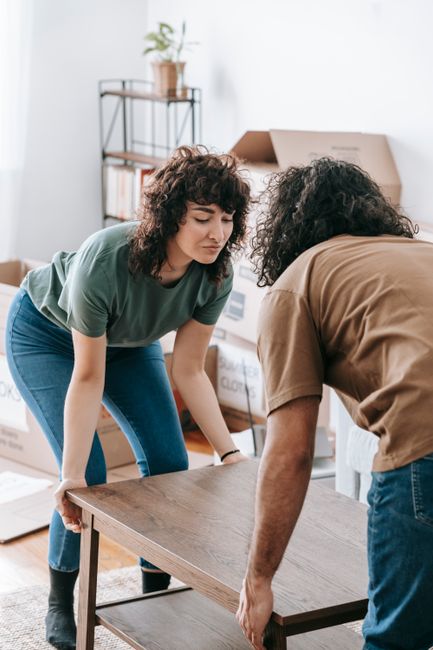
Common Mistakes to Avoid
Most no-lift moving problems come from a handful of predictable mistakes. Avoid these, and the whole day gets easier.
- Overfilling boxes. A heavy box on stairs is a bad idea, even if it has neat tape on top.
- Not measuring large items. Guessing leads to awkward half-turns and stuck furniture.
- Trying to do everything in one trip. More speed at the start can mean more damage later.
- Leaving packing to the end. That creates chaos right when you need calm.
- Ignoring stairwell layout. A straight stair is one thing; a twist with a narrow landing is another.
- Using too few helpers. The "we'll manage" approach works until the mattress reaches the bend.
- Forgetting about the weather. Wet shoes, damp boxes, and slippery steps are a bad mix.
There is also a hidden mistake people make: they treat all furniture the same. They are not the same. A bookcase, a bed frame, a freezer, a piano, and a sofa each need different handling. If you need guidance for specialist items, the article on why piano moving solo is risky is a strong reminder that some jobs are simply not worth improvising.
And yes, it is tempting to keep pushing just because you are "nearly there". Nearly there can still mean a bruised wall, a strained shoulder, or a badly nicked doorframe. Nearly there is not a plan.
Tools, Resources and Recommendations
You do not need a van full of gadgetry, but a few well-chosen tools make a no-lift move significantly easier.
| Tool or resource | Why it helps | Best used for |
|---|---|---|
| Furniture blankets | Reduce scratches and impact marks | Sofas, cabinets, table edges |
| Ratchet straps | Keep items secure during transport | Van loading and tall items |
| Tape measure | Prevents guesswork on stair width and item size | Route planning, furniture checks |
| Dolly or sack truck | Helps with ground-level moving where stairs are not involved | Heavy boxes, appliances at street level |
| Labels and markers | Speeds up sorting and unloading | All packed boxes |
| Gloves with grip | Improves control on awkward items | Boxes, frames, smooth surfaces |
For the bigger picture, it can help to review the services overview and compare it with removal services in Primrose Hill. If you are deciding how much support you actually need, that can save a lot of guesswork. Some people only need transport. Others need full help from staircase to destination.
Storage is also worth thinking about if your dates do not line up neatly. Sometimes a no-lift move is made much easier by shifting non-urgent items out first. In that case, storage in Primrose Hill may be part of the solution. A short-term split move can be surprisingly sensible, even if it feels a bit inconvenient at first.
Law, Compliance, Standards, or Best Practice
For this kind of move, the main compliance concern is not a legal loophole or paperwork trick. It is safe working practice. In the UK, the general expectation is that lifting and moving are done in a way that avoids preventable injury and damage. That means sensible load sizes, safe lifting posture, proper communication, and not asking one person to do a two-person job.
If you are hiring help, it is reasonable to expect that the company has clear health and safety practices, appropriate insurance, and straightforward terms. You do not need a legal lecture. You do need confidence that if something goes wrong, the process is handled properly. That is why it is sensible to review pages like health and safety policy, insurance and safety, and terms and conditions before booking any move.
If you are paying online, payment and security matters too. Clear payment terms reduce stress later, especially if you are coordinating a move around deposit return dates or tenancy deadlines. And if you care about how waste is handled, the page on recycling and sustainability is relevant when you're deciding what to keep, donate, recycle, or store.
Accessibility also matters. A stair-heavy building can be challenging for anyone with limited mobility, injury concerns, or fatigue issues. In those cases, the practical answer is to plan around that reality rather than pretending it will be fine on the day. Sometimes the kindest move is the slower one.
Options, Methods, and Comparison Table
There is no single right way to handle flats without lifts. The best method depends on the building, the furniture, and how much time you have. Here's a simple comparison to help you judge the options.
| Method | Best for | Pros | Trade-offs |
|---|---|---|---|
| DIY with friends | Small-to-medium flat moves with light furniture | Lower cost, flexible timing | Higher physical strain, more risk if route is awkward |
| Man and van support | Typical Primrose Hill flat moves with moderate loads | Good balance of help and value | Still needs preparation and good packing |
| Full removal service | Bulky, fragile, or time-sensitive moves | Less stress, more structure, better handling of stairs | Usually costs more than DIY |
| Split move with storage | When move-in and move-out dates don't align | Reduces pressure on moving day | Requires extra planning and possibly extra handling |
If you are comparing providers, removal companies in Primrose Hill and removals in Primrose Hill are useful starting points for understanding what level of support fits your move. If the stairwell is particularly awkward, that usually nudges people towards more help, not less. Sensible, really.
Case Study or Real-World Example
Here's a very typical Primrose Hill scenario. A tenant is moving out of a second-floor flat in a Victorian conversion. No lift. Narrow staircase. A sofa, bed frame, mattress, four medium boxes of books, kitchen items, and a few fragile bits. Nothing outrageous, but enough to turn into a mess if handled casually.
The move starts well because everything has been packed the night before. Books are in small boxes. The bed frame has been dismantled. The sofa is wrapped. The largest items are loaded first while everyone is fresh. A helper stands on the landing to guide the turns. The route is cleared before each carry. That alone makes a big difference. You can almost hear the relief in the room when the first awkward item clears the turn without scraping the wall.
Now compare that to the common alternative: packing on the morning, overfilling boxes, carrying the mattress first because it looks easiest, then realising the sofa is too wide for the landing angle. That version usually ends with people tired, irritated, and saying things like "we should have measured this" after the fact. Which, yes, is true - but not especially useful at that point.
What made the difference in the better version? Three things: early packing, route planning, and using the stairwell in the right order. Nothing glamorous. Just careful work. That is usually how these moves succeed.
Practical Checklist
Use this before moving day. Print it, save it, scribble on it, whatever works.
- Measure stair width, landings, and large furniture
- Dismantle beds, tables, and anything that comes apart safely
- Pack heavy items into small boxes
- Label boxes clearly on the top and side
- Protect sofas, corners, and fragile surfaces
- Clear hallways and landings before lifting
- Confirm parking and van access in advance
- Set aside water, snacks, and basic first aid supplies
- Keep a tool kit for last-minute fixes
- Move the heaviest items first, while everyone is fresh
- Use short, clear commands on the stairs
- Have a plan for storage if dates do not align
- Check insurance and safety arrangements if you are hiring help
- Do a final sweep for keys, chargers, and documents before leaving
If you want a calmer build-up to the day, calm and controlled house move tips pairs well with the checklist above. And for the final clean-out, there's also a pre-move home cleaning guide that can help you leave the flat in better shape than you found it. Always a good feeling, that.
Conclusion
Flats without lifts are not unusual in Primrose Hill, but they do require a smarter approach. The key is to respect the stairs, reduce the load, plan the route, and avoid the false economy of rushing. Once you start thinking in terms of access, weight, sequence, and safety, the whole move becomes more manageable. Still tiring, yes. But manageable.
Whether you are moving a compact student flat, a family sofa set, or a few stubborn pieces through a Victorian stairwell, the same principle holds: preparation beats panic. Every time. And if the move is too awkward to handle comfortably on your own, there is no shame in bringing in support. Quite the opposite, really - it is often the wise move.
Get a free quote today and see how much you can save.
In the end, a good no-lift move is not about heroics. It is about getting to the other side with your furniture, your walls, and your sanity all still intact. That's a good day's work.
![Exterior view of a multi-storey residential building with a light blue façade and decorative white architectural details, situated along a street lined with parked cars. The building features several bay windows with white frames, small balconies with ornate balustrades, and a main entrance with a brown door. Sunlight illuminates the building, casting shadows on the pavement, with a clear blue sky overhead. In the foreground, a row of vehicles, including sedans and hatchbacks, are parked along the curb on the paved street, which appears to be part of a residential area in Primrose Hill. The image also shows some leafless trees in the background, indicating a season of late autumn or winter. This scene is typical of a city neighbourhood where house removals and furniture transport by [COMPANY_NAME] may involve navigating street congestion and parking restrictions during efficient home relocation processes, especially in flats without lifts requiring careful planning for the loading process.](/pub/blogphoto/flats-without-lifts-practical-primrose-hill-moving-hacks3.jpg)